The island’s drought
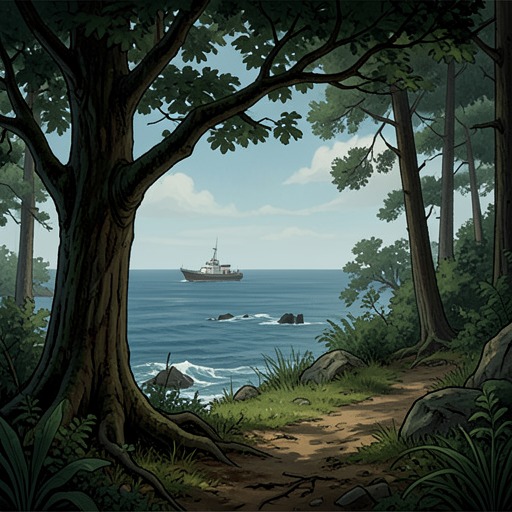
The Summer BookThe island’s drought turns a season of ambitious planting into a crisis of water, exposing the tension between cultivating a garden and living within a fragile island ecology. As rain fails and the island’s own vegetation withers, Sophia’s Papa’s ingenious irrigation system keeps the imported plants alive by consuming the stored water on which the rest of the island depends. The eventual rescue is practical and precarious: the family hauls water from a bog in the Enormous Plastic Sausage, then brings it ashore as a storm breaks and rain finally arrives.
Early Signs and a Changed Island
Dry spells already trouble Grandmother before the garden project begins. Although she knows that small islands can take care of themselves, she secretly visits the marsh pond, where she has hidden a watering can beneath the alders. With a coffee cup she scoops up the last dregs and splashes water on the plants she likes best. This discreet, small-scale care anticipates the larger problem: on the island, water is limited, and tending chosen plants means making decisions about what receives it.
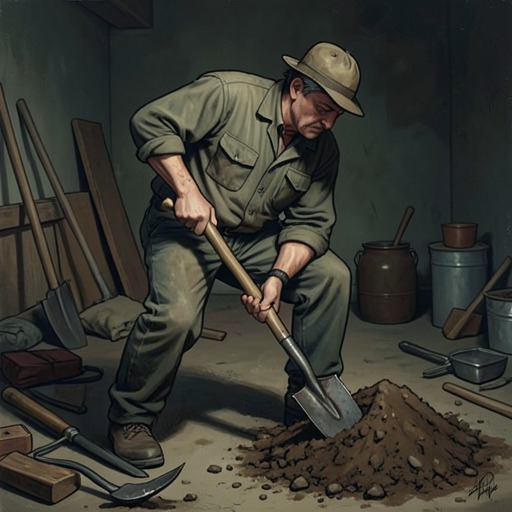
The decisive change begins when Sophia’s Papa becomes absorbed in flower catalogues and orders bulbs from Holland. He later returns alone to plant them, spending the winter learning how delicate cultivated plants must be protected from frost, storms, mice, and the sea. When the family comes back, boats carry black inland soil, shrubs, trees, and hundreds of seedlings. Sophia’s Papa tears up the turf, clears bedrock for deep planting holes, builds windbreak walls, and digs up the marsh pond for a concrete dike. The transformation is deliberate and extensive: the island’s natural ground is being remade to support plants that cannot live there without careful provision.
Irrigation and the Growing Shortage
After a late, stormy spring, the planting takes hold. Dutch bulbs open and new roots spread; one morning Sophia spots a tulip emerging, and for a time the growing plants make the labor seem rewarded. The poplar, twelve feet tall and carefully braced above the beach meadow, is the notable exception: it remains bare even as the other plants put out leaves.
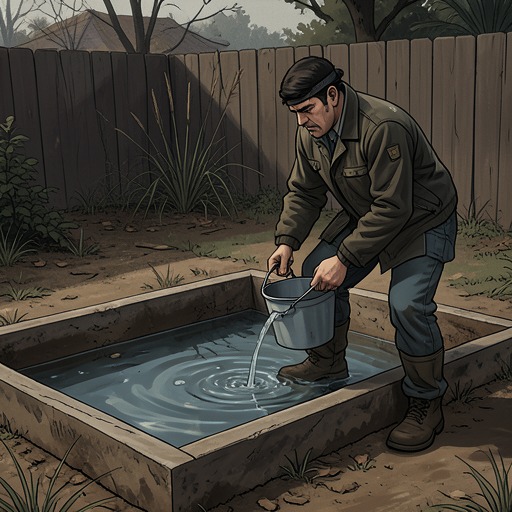
The watering system is a substantial piece of engineering. Plastic hoses, already sunk halfway into the moss, connect through brass couplings to a pump beside one of the island’s largest natural rainwater basins. A plastic cover reduces evaporation. Twice a week, Sophia’s Papa runs warm brown water through sprinklers, timing each plant’s allotment with an egg timer: one minute for some, three or five for others. The measured schedule keeps the cultivated garden supplied, but leaves no water for the rest of the island.
The cost accumulates slowly. The island’s turf browns and curls at the edges like old sausage slices, and several spruces die. Elsewhere along the coast, thunderstorms move back and forth with torrents of rain, but the storms do not reach the island. The weather above it remains relentlessly fine, while the basin’s level sinks. The garden’s careful maintenance and the island’s natural decline occur side by side: the hoses feed particular plants, while the surrounding ground dries out.
The Empty Basin and the Water Haul
Sophia prays for help, but the shortage continues. One evening, while Sophia’s Papa is watering, the pump gives a dreadful gurgle and the hose goes slack. The basin is empty; its plastic cover lies folded against the bottom. The failure makes the crisis immediate: the garden has been organized around a finite reserve, and the reserve is gone.
Sophia’s Papa spends a full day thinking, calculating, and drawing plans, then takes the boat to the shop to use the phone. The heatwave persists, and the island looks more exhausted each day. After he goes to the shop again and then takes the bus into town, Sophia and Grandmother understand that the situation has become catastrophic. He returns with the Enormous Plastic Sausage, its heavy orange folds filling half the boat, and the family sets out at once with the pump and hoses.
They fill the sausage at a bog on Bog Skerry. The pump draws water into the great plastic container until it swells into a shiny balloon holding thousands of litres. The return is not a simple tow: mud and sand make the rainwater-heavy load difficult to move, the motor labors, and the sausage crosses reefs as the boat takes water over its stern. Thunder rolls between the islands. Grandmother, who has fallen asleep, wakes to cooler air, darkening surroundings, and the smell of rain. In the shallows, the container repeatedly strikes bottom; water pours steadily over the boat’s rail as the family makes for the island.
Water Returns
At the island, Sophia’s Papa wades ashore and Sophia follows with the hose. Grandmother carefully gets over the side, wades, and swims a few strokes before sitting on a rock to empty her shoes. Sophia’s Papa hauls the sausage into place and reconnects the system. When the pump starts, a clump of mud and sand shoots into the air, followed by a strong stream that sends moss flying. Water runs through the hoses for the named flowers and shrubs, and Sophia sees it arch over the island into the dry basin. She then finds the green root sprout she had expected at the poplar.
Rain arrives in the same moment, warm and tumultuous, so the island receives water from the pump and the storm together. Grandmother watches the basin, barrels, and hollows in the granite fill and overflow; mattresses are outside airing, and dishes wash themselves in the rain. Her final gesture preserves the story’s sense of measure and excess at once: after a life of frugality, she fills a coffee cup with precious drinking water and pours it over a daisy.
The drought’s resolution does not erase its ecological cost or the garden’s dependence on managed water. Instead, the episode makes that dependence visible through the empty basin, the dead spruces, the curling turf, and the family’s strenuous journey to replenish their supply. The sudden rain relieves the emergency, but the contrast remains: an island can appear abundant and self-sustaining while its water, soil, and planted life remain vulnerable to heat and human choices.